
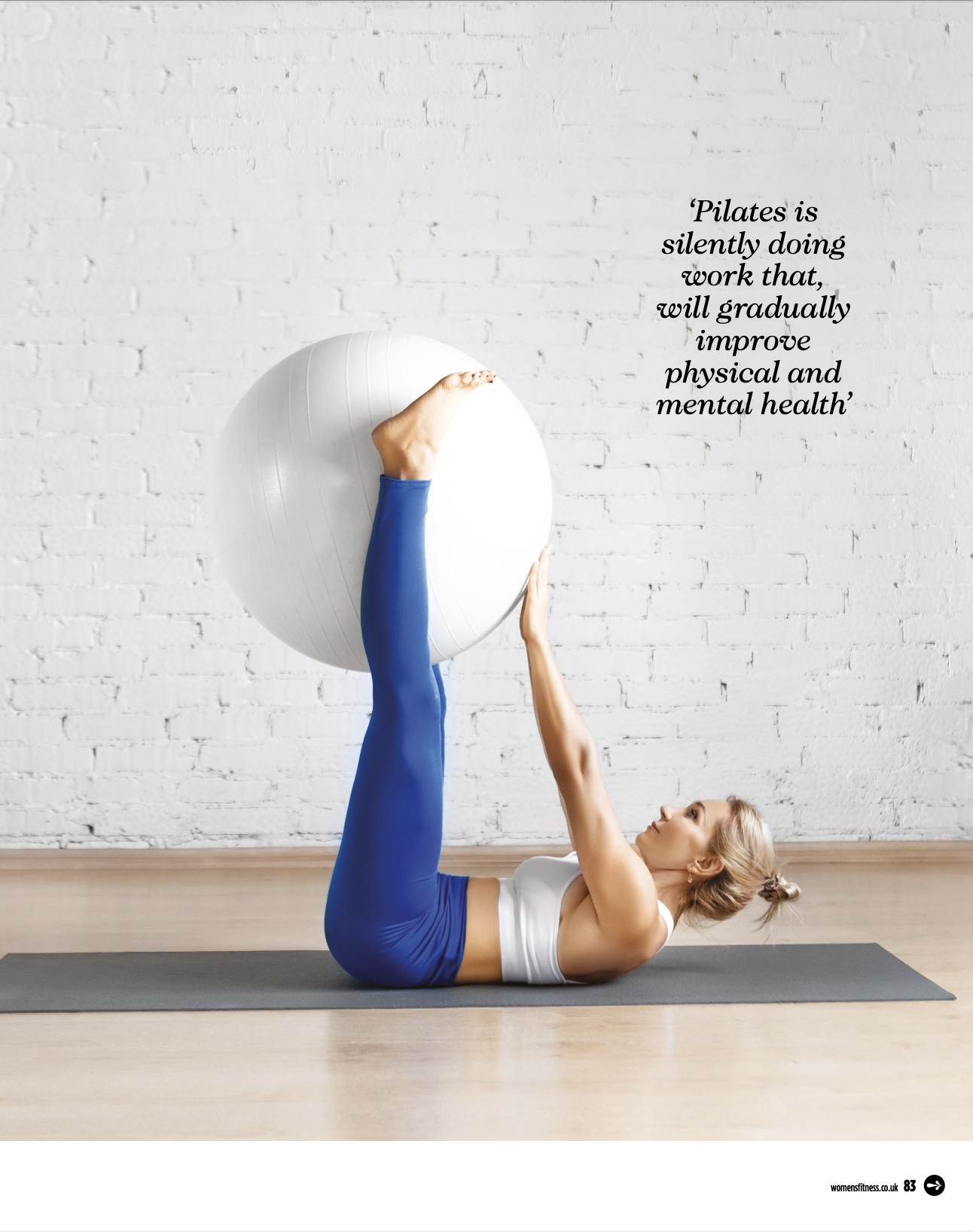
Stability over Strain - Women's Fitness’s Pilates Doctor
This column was published in the February 2025 issue of Women's Fitness, as part of my regular Pilates Doctor feature.
Cold weather affects joints more than most people realise. As temperatures drop, the body prioritises keeping your core organs warm — which means less circulation to your hands, feet and joints. For anyone living with arthritis or a chronic joint condition, this can mean increased stiffness, pain and reluctance to move. But staying still makes it worse.
Pilates is not about pushing through. It is about learning how your body moves, where it holds unnecessary tension, and how to build the kind of deep stability that actually supports your joints rather than straining them. The approach I write about here — breath, alignment, core connection — is the same foundation I use with clients at Beyond Move every day, whether they are managing osteoarthritis, recovering from injury, or simply noticing the effects of age and cold on their body.
The five Swiss Ball exercises in this feature are a good starting point. They are low-impact, adaptable, and work precisely the areas that tend to suffer most in winter: lower back, shoulders, hips and the smaller joints of the hands and feet. Five minutes a day of focused, intentional movement is enough to make a difference over time.
If you are unsure where to begin, please speak to your GP or physiotherapist first — and when you are ready, seek out a qualified teacher who understands your condition, not just a general fitness class.
The full article is featured in Women's Fitness, February 2025.
From Women’s Fitness March 2026
This column was published in the March 2026 issue of Women's Fitness, as part of my regular Pilates Doctor feature.
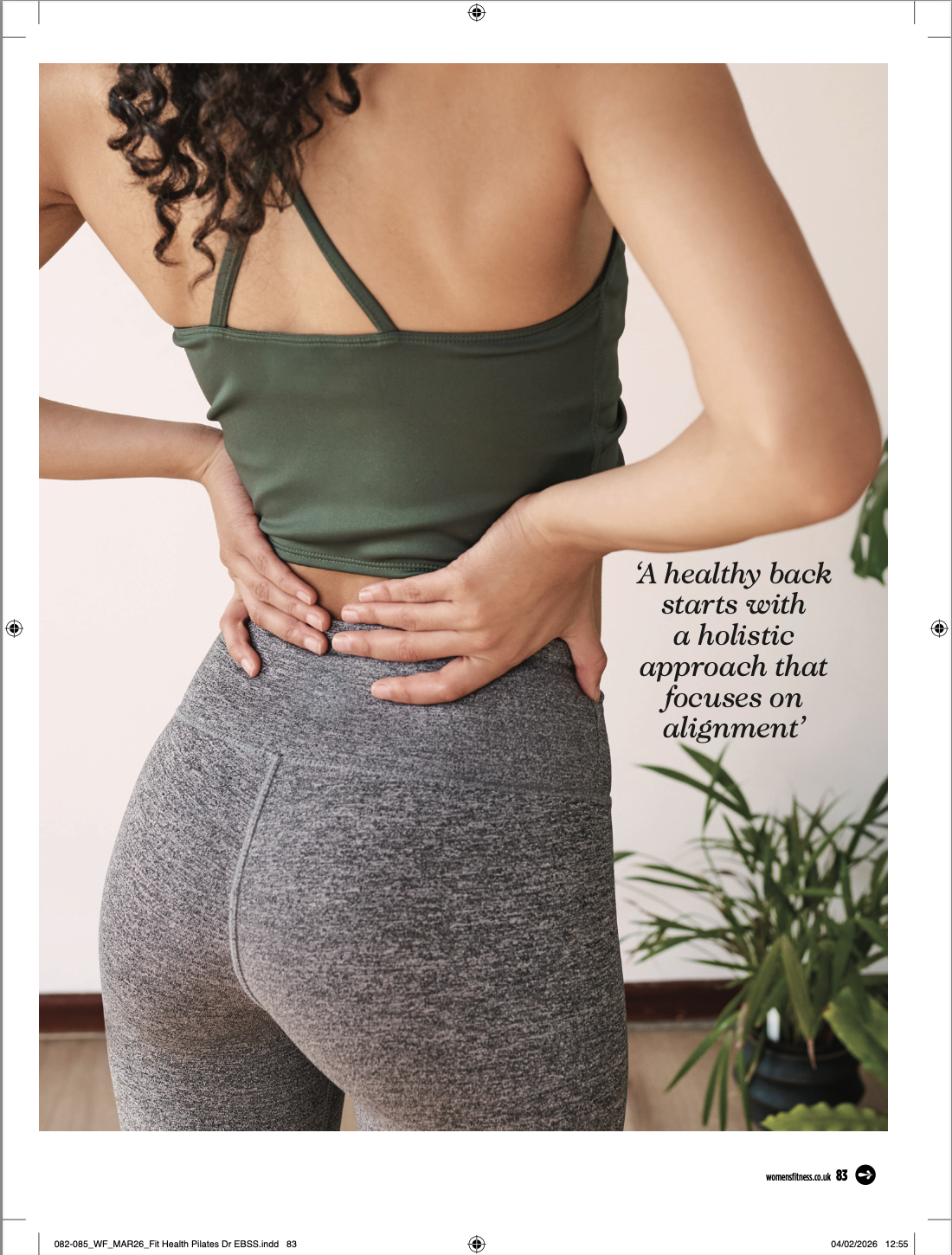
Back pain is one of the most common reasons people come to me at Beyond Move — and one of the most misunderstood. The instinct is often to rest, or to avoid movement altogether. But in most cases, the opposite is true. A healthy back needs to move, and it needs to be supported by the muscles around it working properly.
What I focus on in this feature is not just strengthening the back in isolation, but addressing the whole system: alignment, core engagement, spinal mobility and the smaller stabilising muscles that most people never train. These are the muscles that do the quiet, essential work of keeping you upright, balanced and pain-free over time.
The five exercises I share — breaststroke, modified side plank, hip twist with weights, oblique abdominal prep with a ball, and diamond press-ups — can be done three to five times a week. They work across the posterior chain, the obliques, the lumbo-pelvic area and the upper back. Done with attention to form, you should start to feel a difference within five to six days.
As with all Pilates work: do not push through pain, start with fewer reps and build gradually, and always consult your GP or physiotherapist if you have an existing condition.
The full feature is published in Women's Fitness, March 2026.